Focus on art learning theory, teaching methodology, and pre-student teaching clinical experiences in Art Education grades 6-12. Clinical Experience: 10 hours.
Art 309a02
Professional Art Education Sequence, Secondary Grades
Reflections
-
The dynamic of my group was amazing and really helped with all of the planning running smoothly. There was lots to divide between us, but we were able to work together as a team to create valuable lessons to students of many ages and skill levels.
-
I had never taught older adults before this class, and I was the primary lead teacher for this lesson, so getting my footing and understanding how to best teach them to create a fun and rewarding experience was a little challenging and required some getting used to.
-
In the future, I would want to spread out these lessons over multiple classes so that students do not feel rushed or like their calm environment was being taken away from them. I learned from the adults at NPL that they primarily do art to calm their brains from busy days, so focusing less on a “finished product” and more on the experience is important too.
-
I really enjoyed working and teaching with a team. Even though I am competent and able to teach on my own, it was much more enjoyable to teach with others, and we are able to split up roles in the lesson to better attend to student needs.
-
I enjoyed working with more advanced students. The U-High AP art students were very talented and I loved the way that their work turned out. They were able to take our ideas and really run with them to create some incredible art.
U-High Teaching Experience
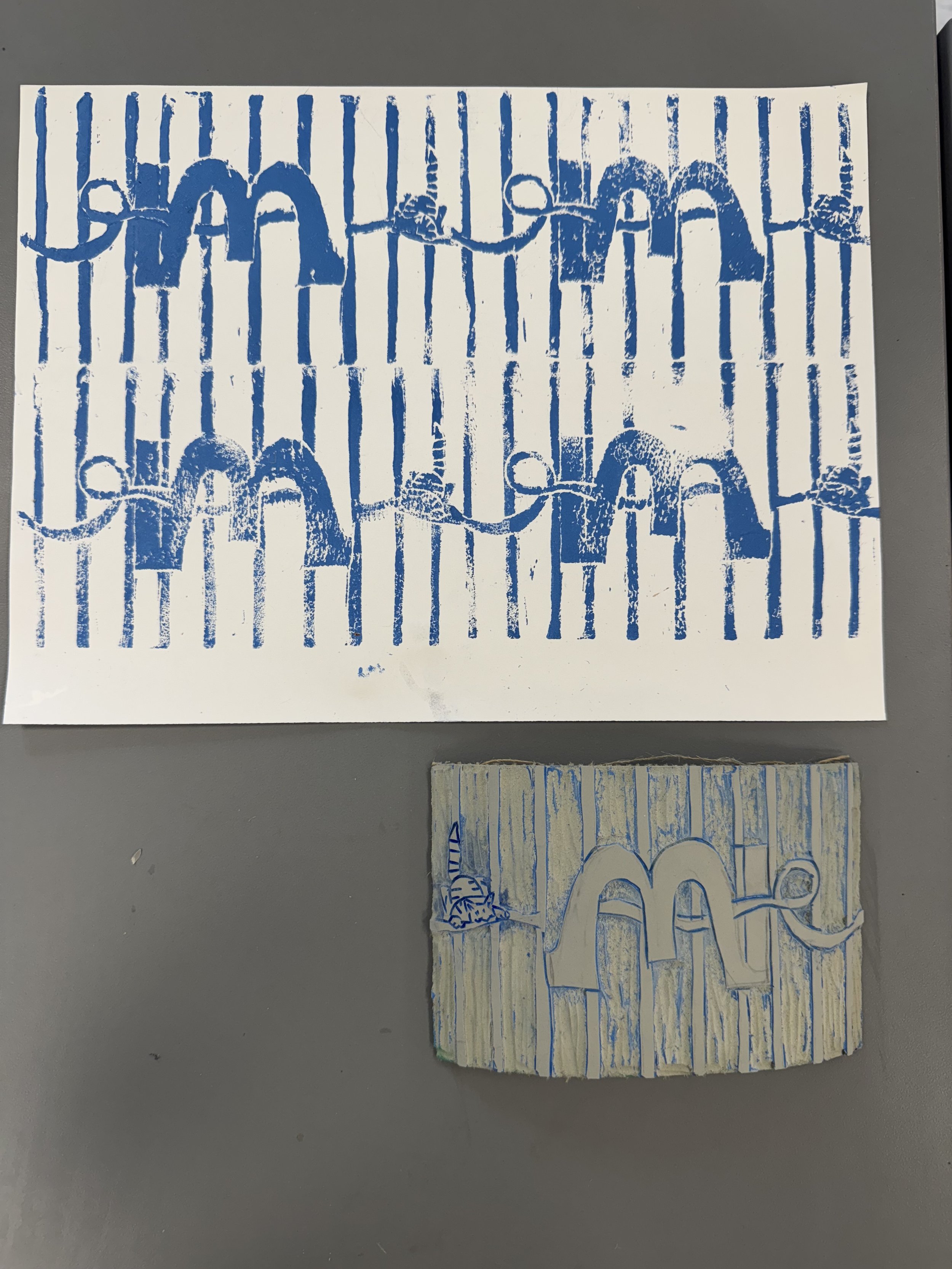
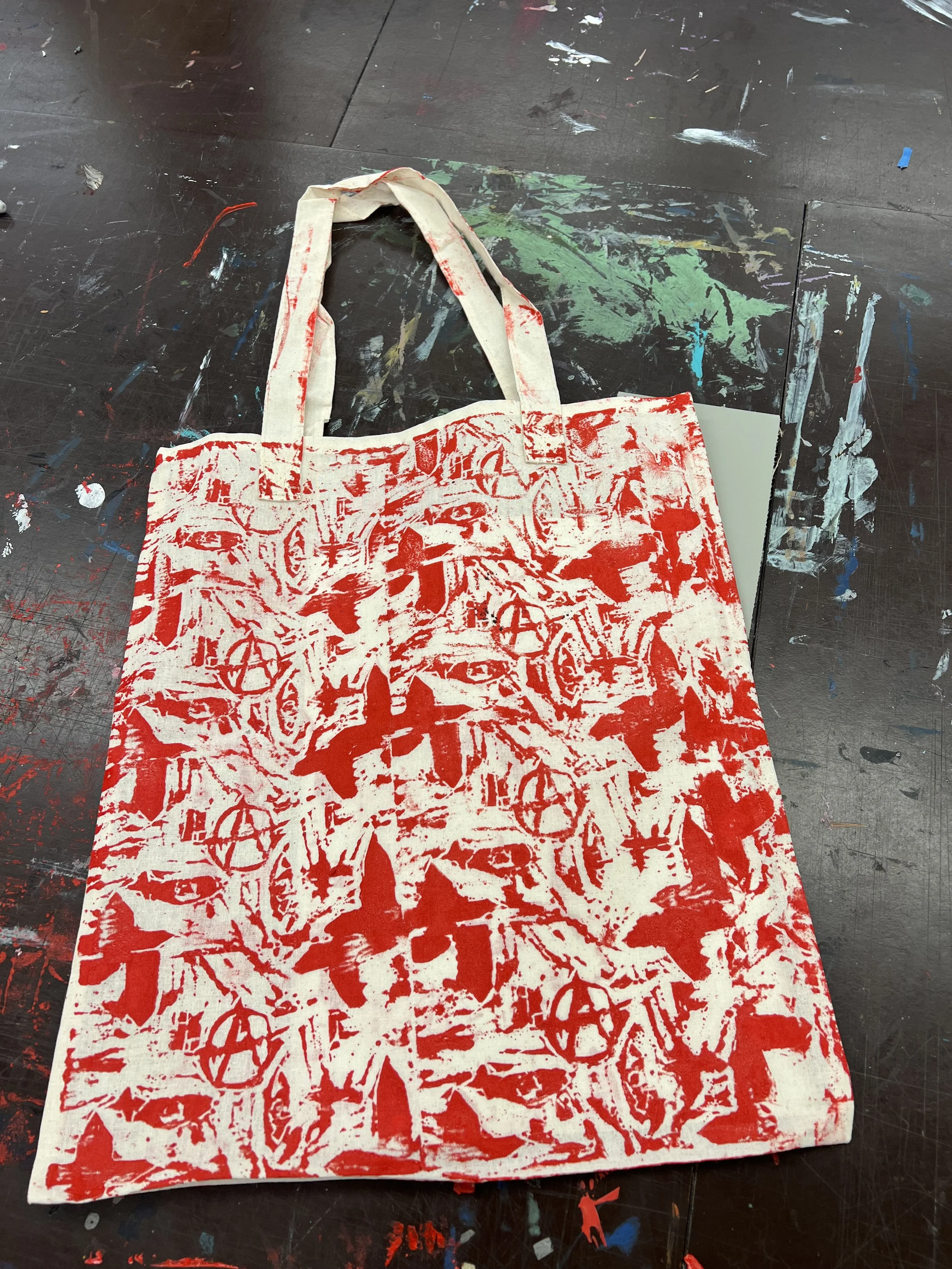
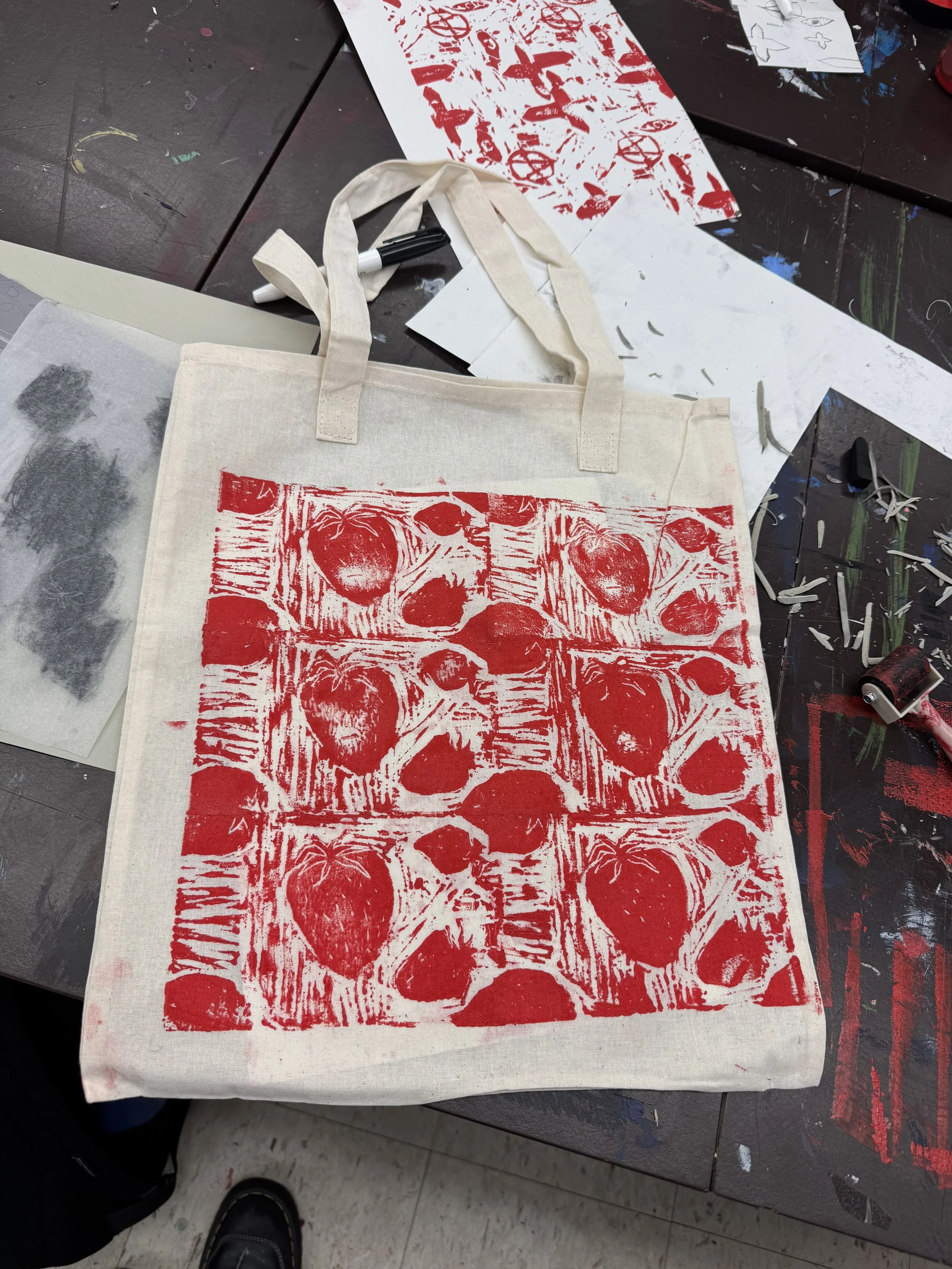
For this experience, my group and I created a printmaking lesson for the AP students of University High School to participate in. Students focused on making repeating patterns using linocut printmaking. Learners created prints and used fabric ink to create a wallpaper-like pattern on a provided tote bag. The patterns interlocked with one another creating a continuous design along their chosen material. By the end of the lesson, students left with their artwork as well as this reusable stamp to use outside the classroom.
Normal Public Library
Teaching Experience
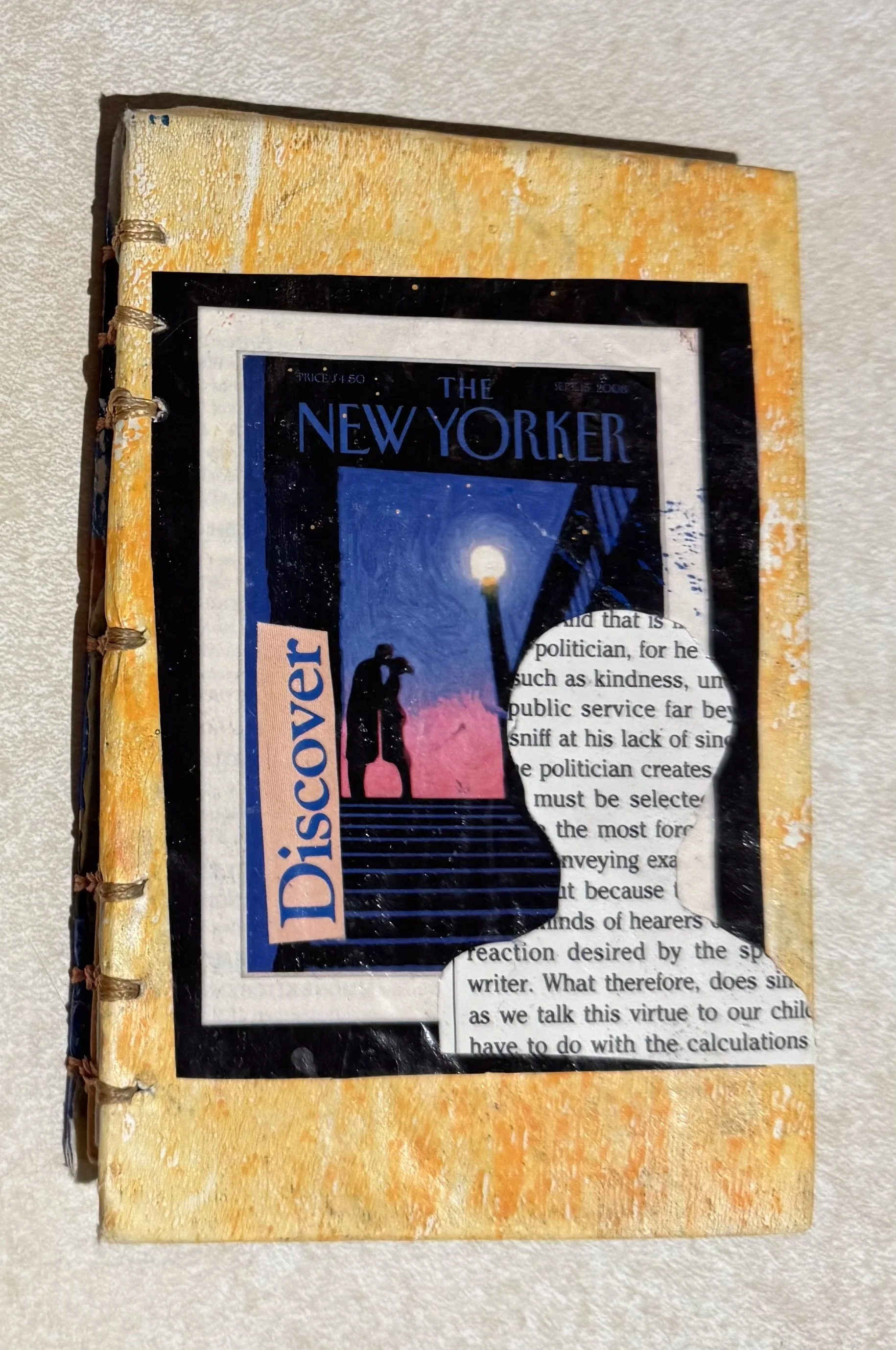
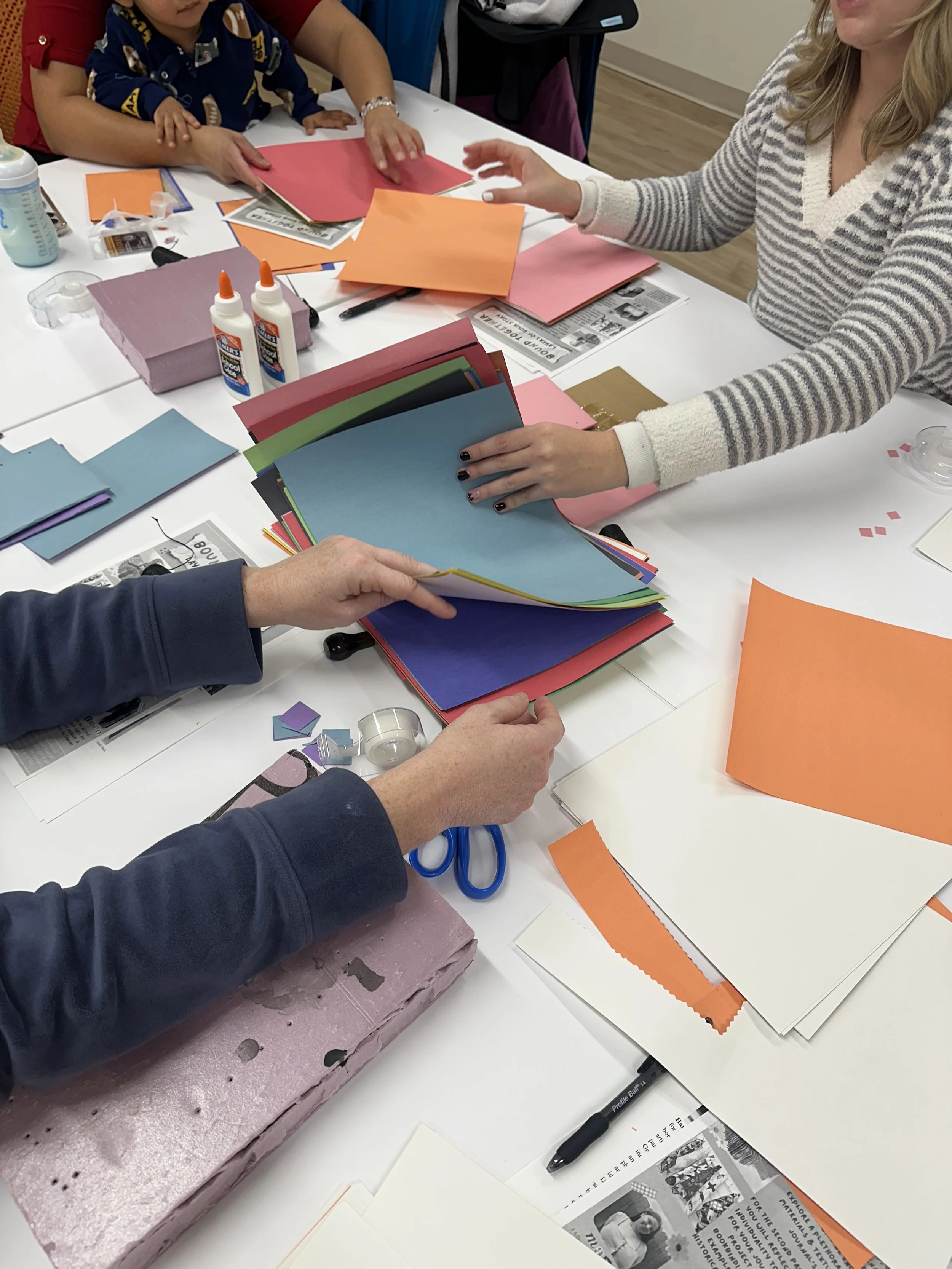
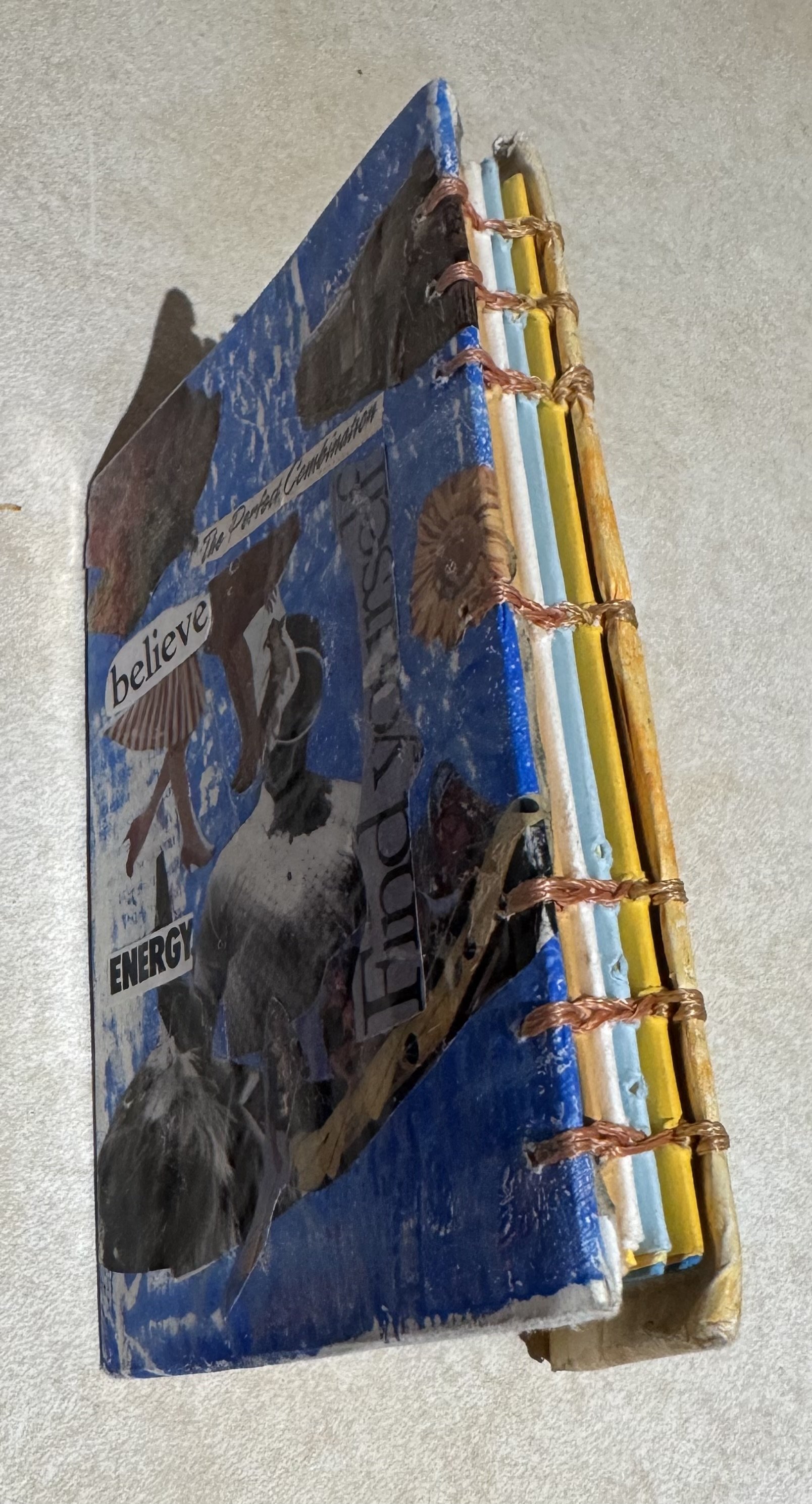
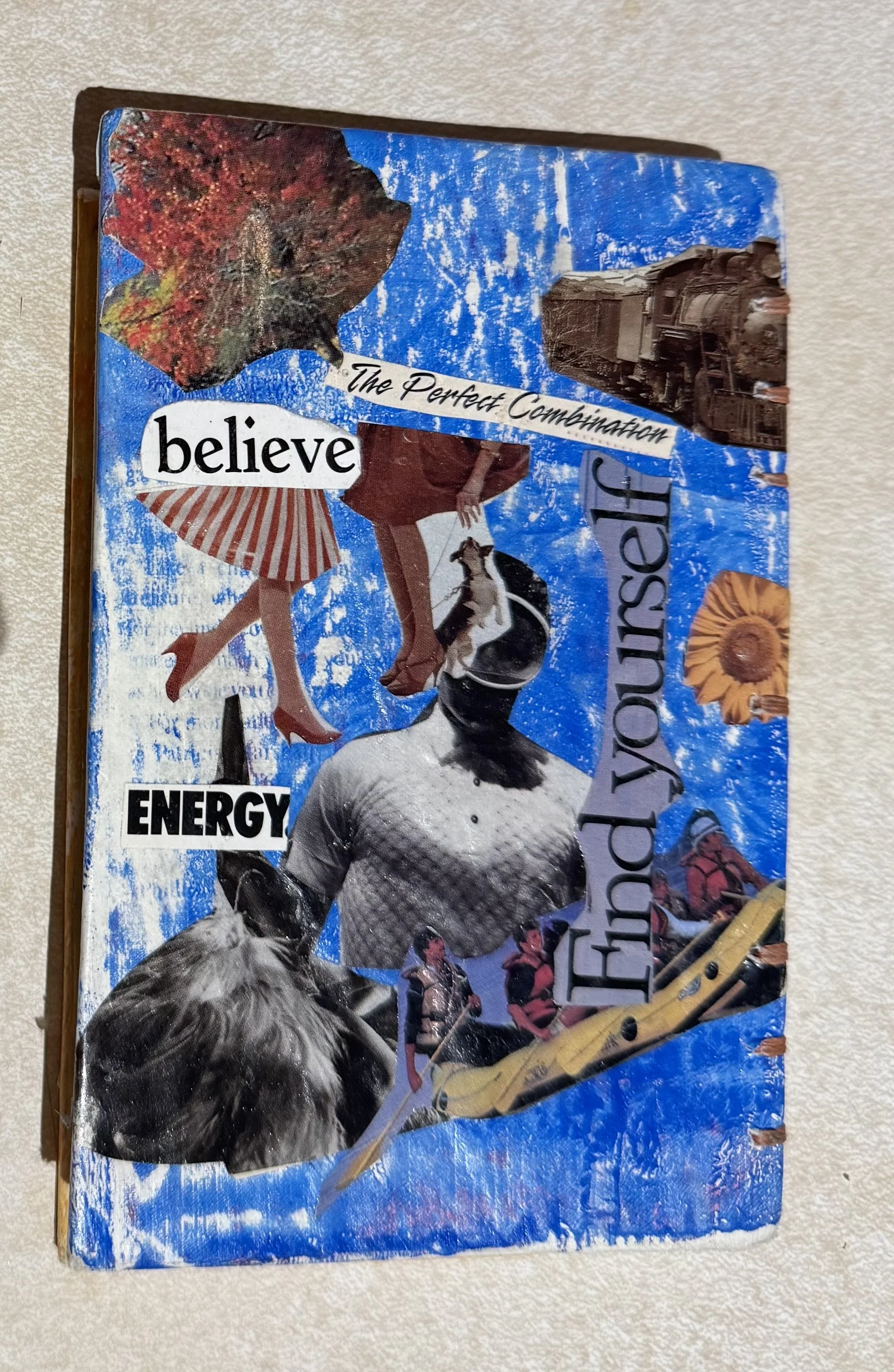
In this two part project, students created their own journals or sketchbooks using the coptic binding method. Students were invited to explore diverse materials and textures for their pages. Students then designed unique covers through collage, reflecting their individuality with the cuse of experimental materials. This project blends the history of bookbinding and collage while viewing examples of both contemporary and historical artist such as Hannah Hoch and Kaija Rantakari. Students will gained hands-on knowledge and creative freedom resulting in the creation of a personalized journal and understanding of these art forms.
Unit Plan
Description
This 5 lesson unit, Multi Media Book Binding, engages high school students in creating personalized sketchbooks or journals using the coptic stitch binding technique. Students explore self-expression through mixed media and collage, designing unique covers and incorporating diverse textures and materials into their pages. The unit integrates technical skill-building with conceptual development, encouraging students to reflect individuality through visual storytelling. Lessons include artist studies of Martha Rosler and Kaija Rantakari, discussions on materiality and meaning, and structured peer critiques. By the end of the unit, students will have a finished hand-bound book that demonstrates craftsmanship, creativity, and personal voice.
Rationale
This unit emphasizes the intersection of technical skill and creative expression, aligning with National Visual Arts Standards by fostering planning, critique, and synthesis of personal and cultural knowledge in art-making. Bookbinding offers students a tactile, process oriented experience that contrasts with digital media, promoting patience, problem solving, and attention to detail. Incorporating collage and mixed media expands students’ understanding of composition, texture, and conceptual meaning, while the critique process develops communication and analytical skills essential for artistic growth. Students experience art as both practical and personal, reinforcing the value of craftsmanship and individuality in contemporary art practices.
Experiencial Theory Booklet
Art education benefits from Experiential Learning Theory, which emphasizes “learning by doing” and reflection as essential to understanding. Kolb’s cycle-concrete experience, reflective observation, abstract conceptualization, and active experimentation—aligns naturally with art making, where students explore materials, reflect on outcomes, and adapt techniques through practice. This approach fosters problem solving, creativity, and self-discovery, helping learners develop both technical skills and personal voice. Additionally, experiential learning supports diverse learning styles, encouraging collaboration and critical thinking while making art education meaningful and memorable.
Pal 1:
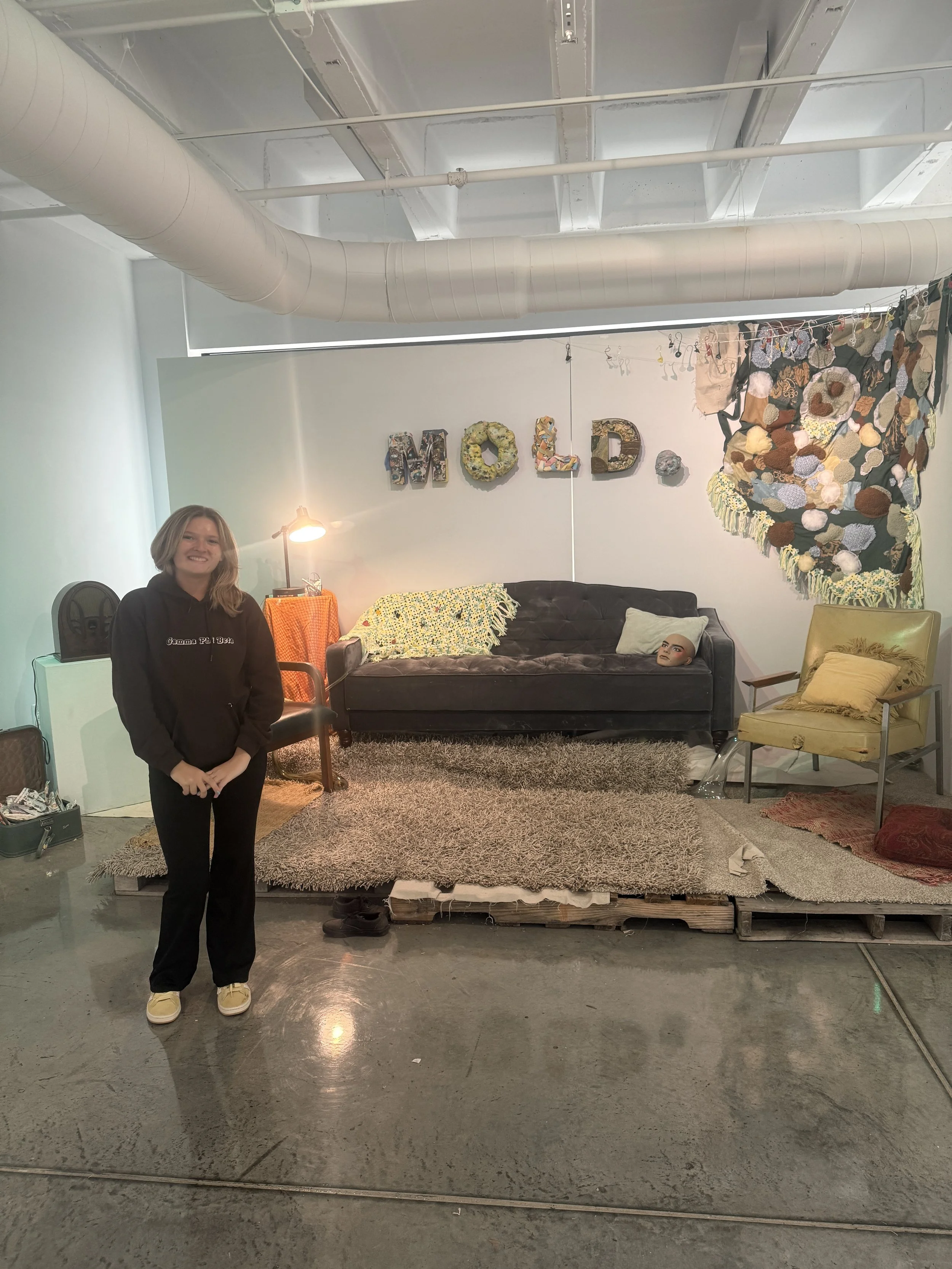
Visit the Studio Art Gallery in Julian Hall to witness the “Mold” art exhibition
Activity Description
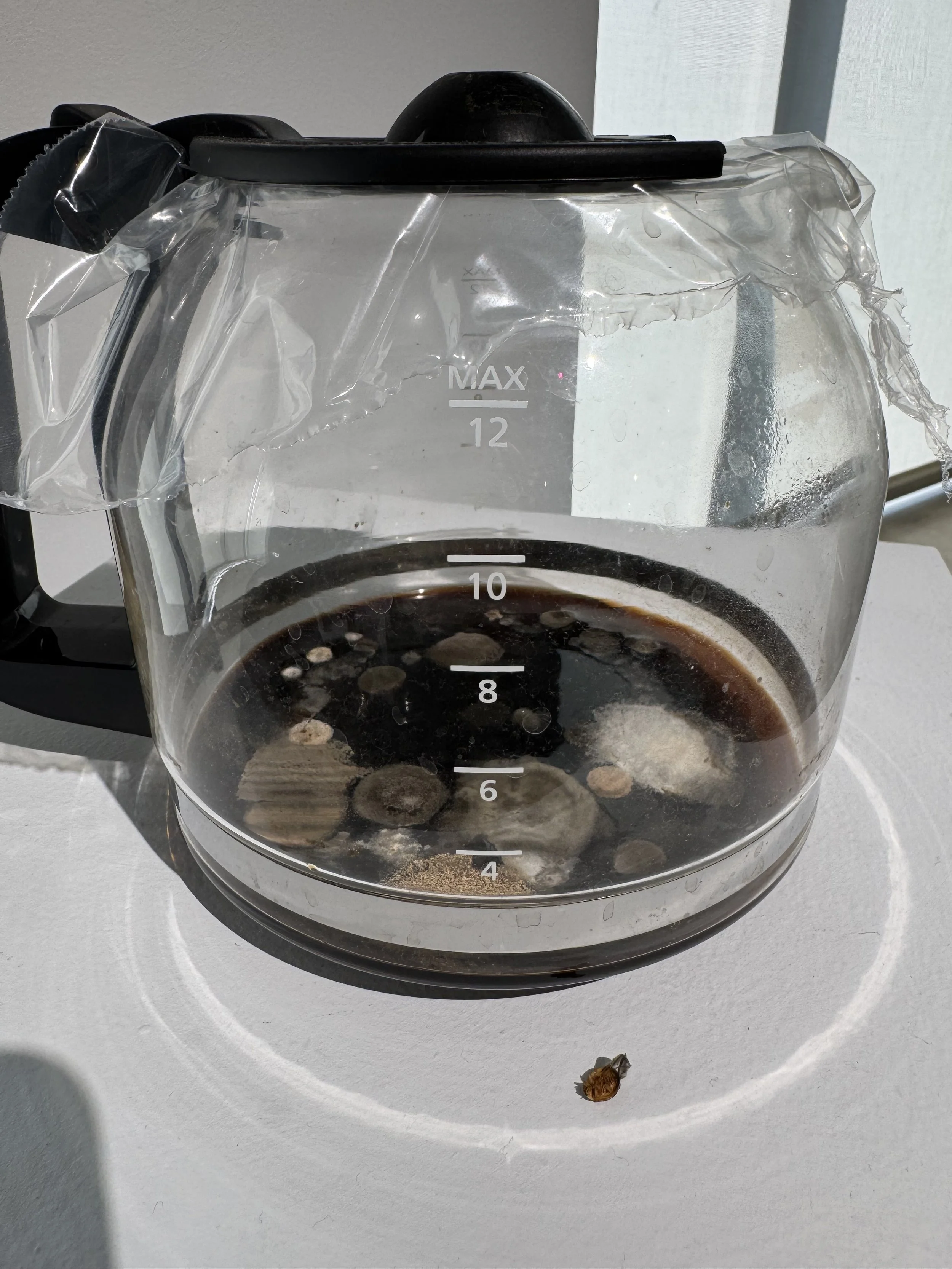
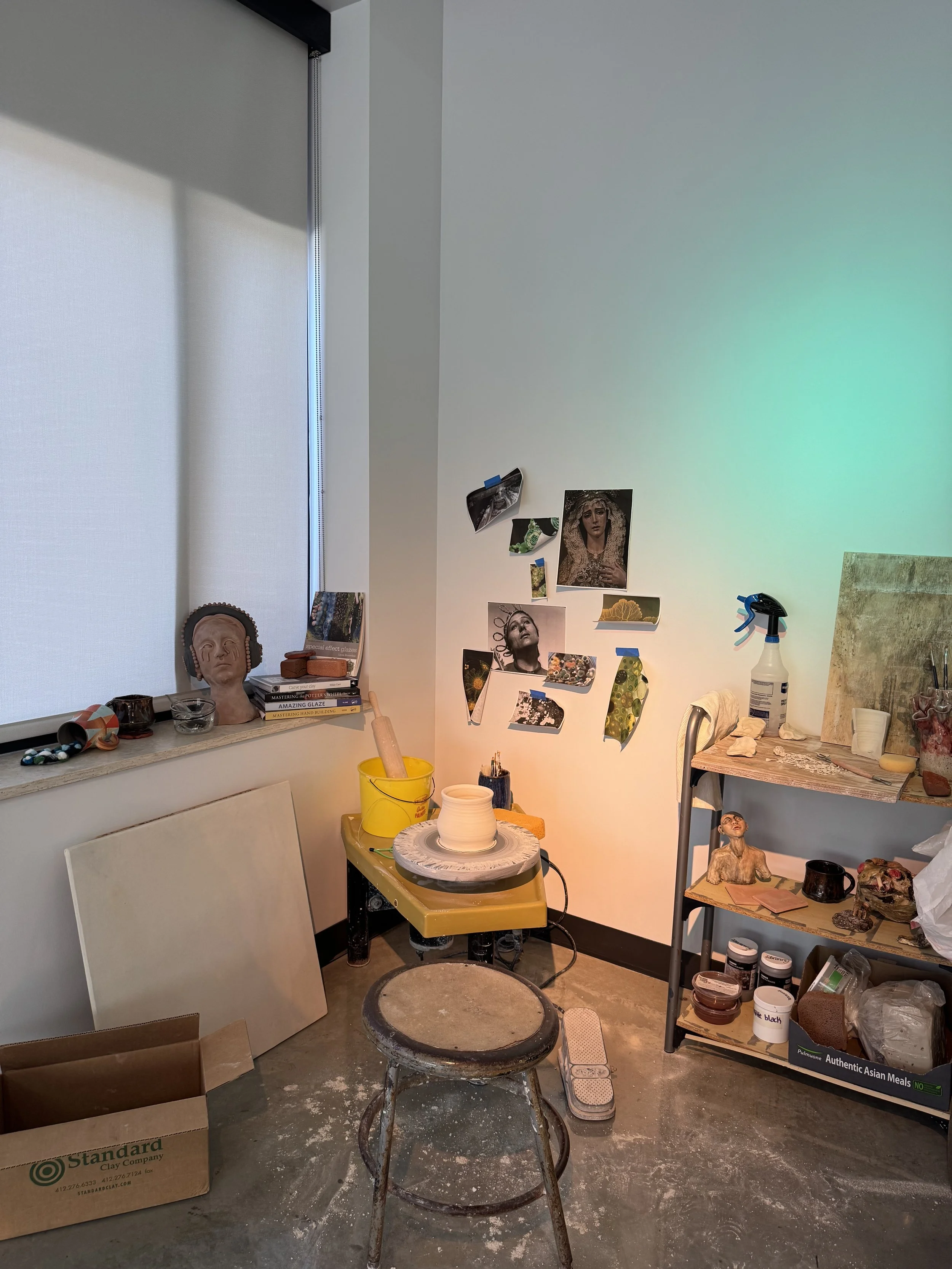
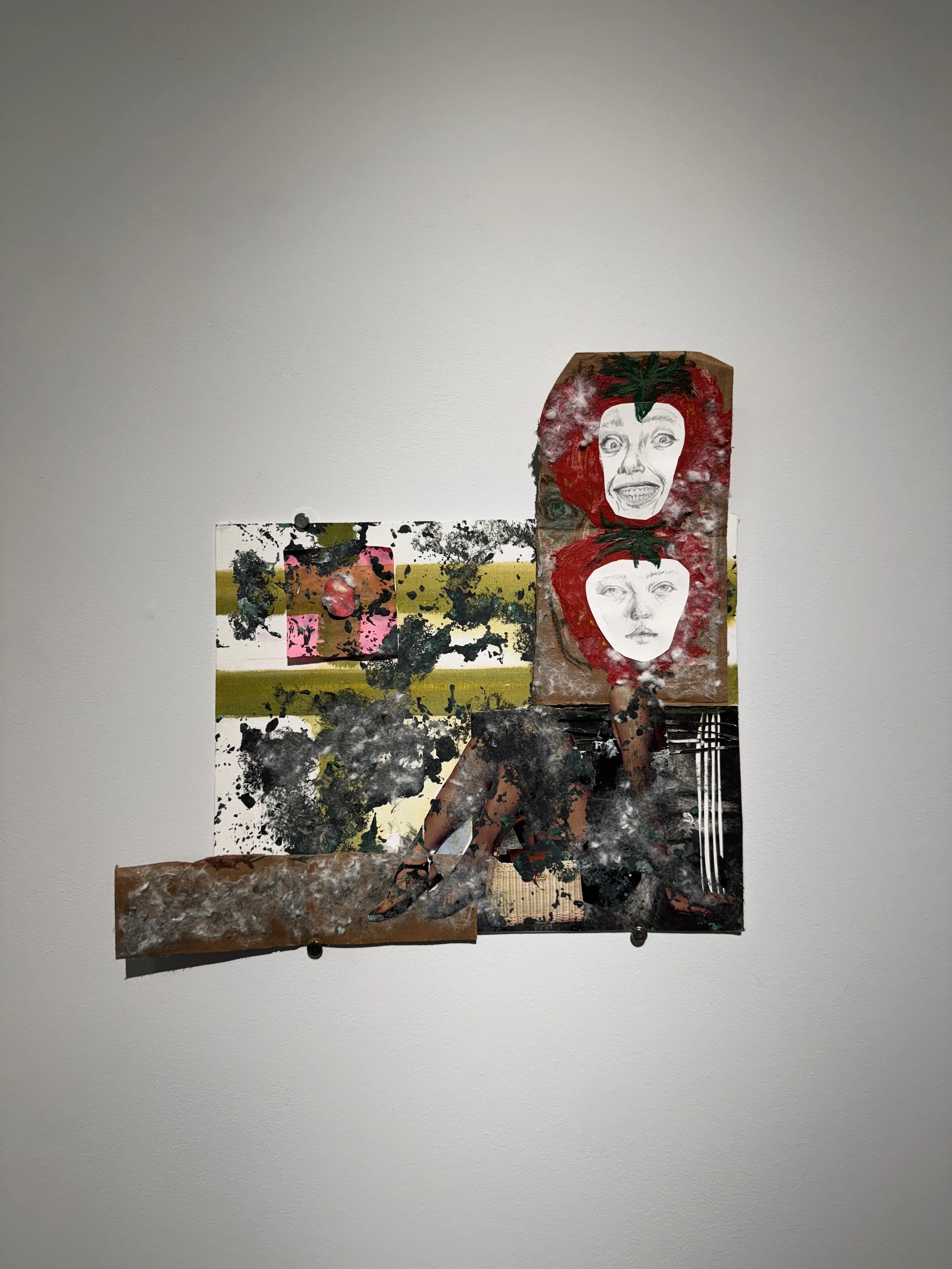
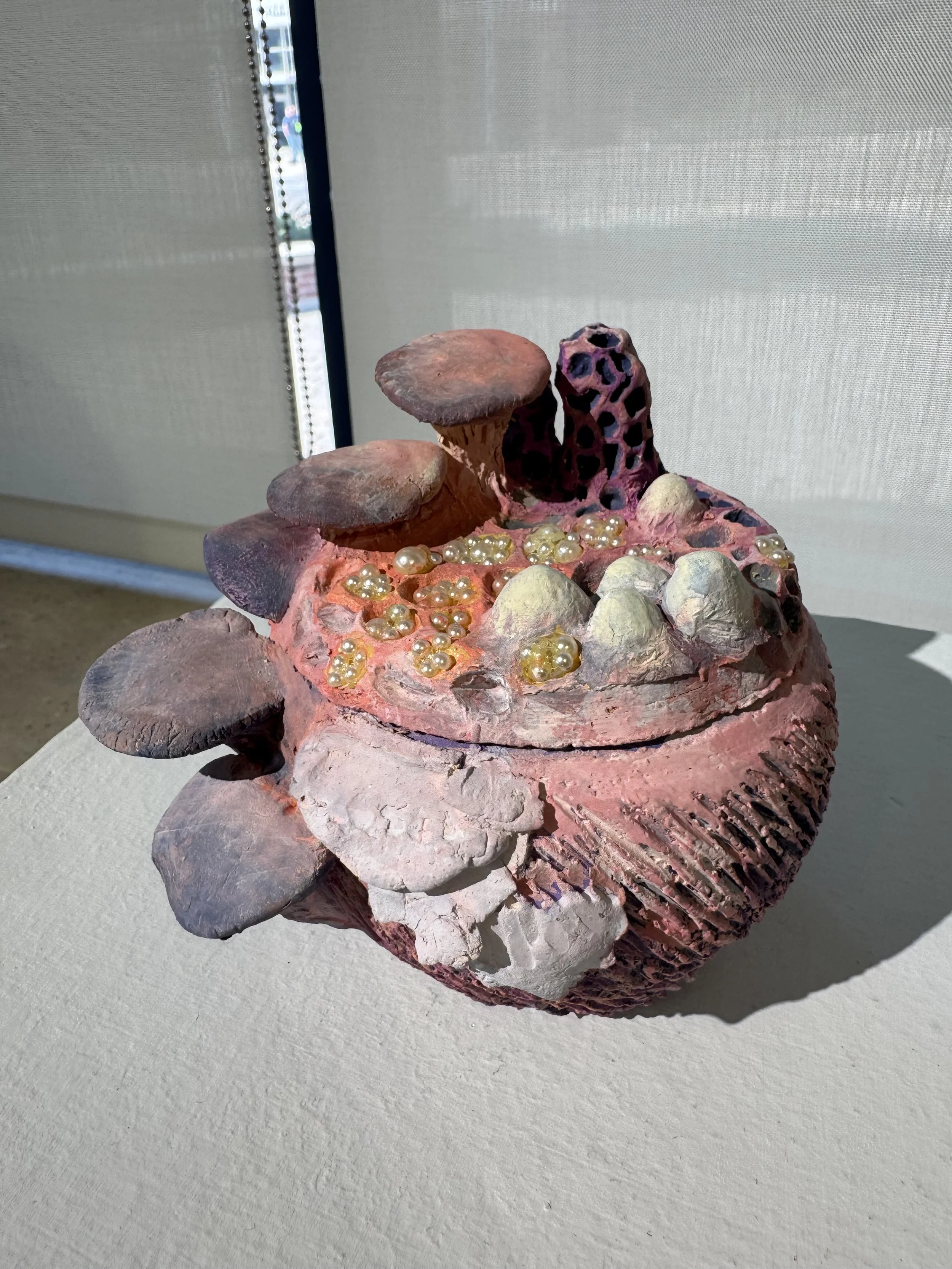
On October 14, 2025, I visited the Student Galleries in Julian Hall to view the Studio Art BFA Collaborative Exhibition for the Fall. The theme was mold, “in the sense that it, like creativity, blooms and spreads. This exhibition included large scale scenes with molding details, mixed media 2D art, paintings, ceramic pieces, and more.
Rationale
Participating in viewing the Student Gallery exhibition provided an opportunity for professional growth by engaging with studio practices and themes explored by artists. Observing the BFA Collaborative Exhibition allowed me to reflect on approaches to mixed media and installation art, which informs by own teaching philosophy and future curriculum. This experience demonstrates IPTS 9D by identifying ways to expand my knowledge of artistic trends and integrate them into future lessons, supporting a professional growth plan centered on staying current in the field. It fulfills IPTS 9O by connecting with the broader learning community. Interacting with student work and institutional resources fosters collaboration and advocacy for the arts. Engaging in these experiences strengthens my ability to lead and advocate for meaningful, relevant art education while modeling lifelong learning for my future students.
Activity Description
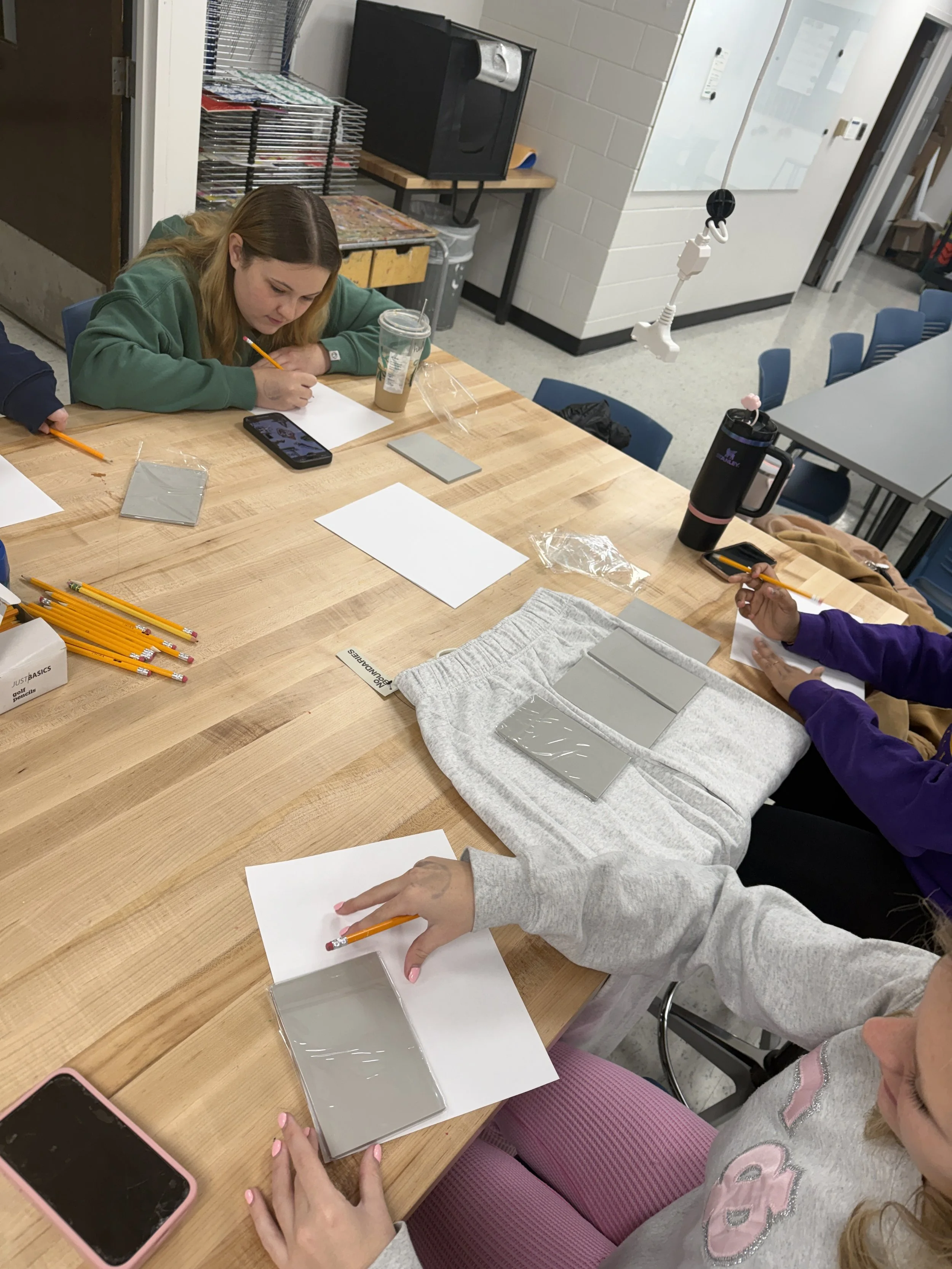
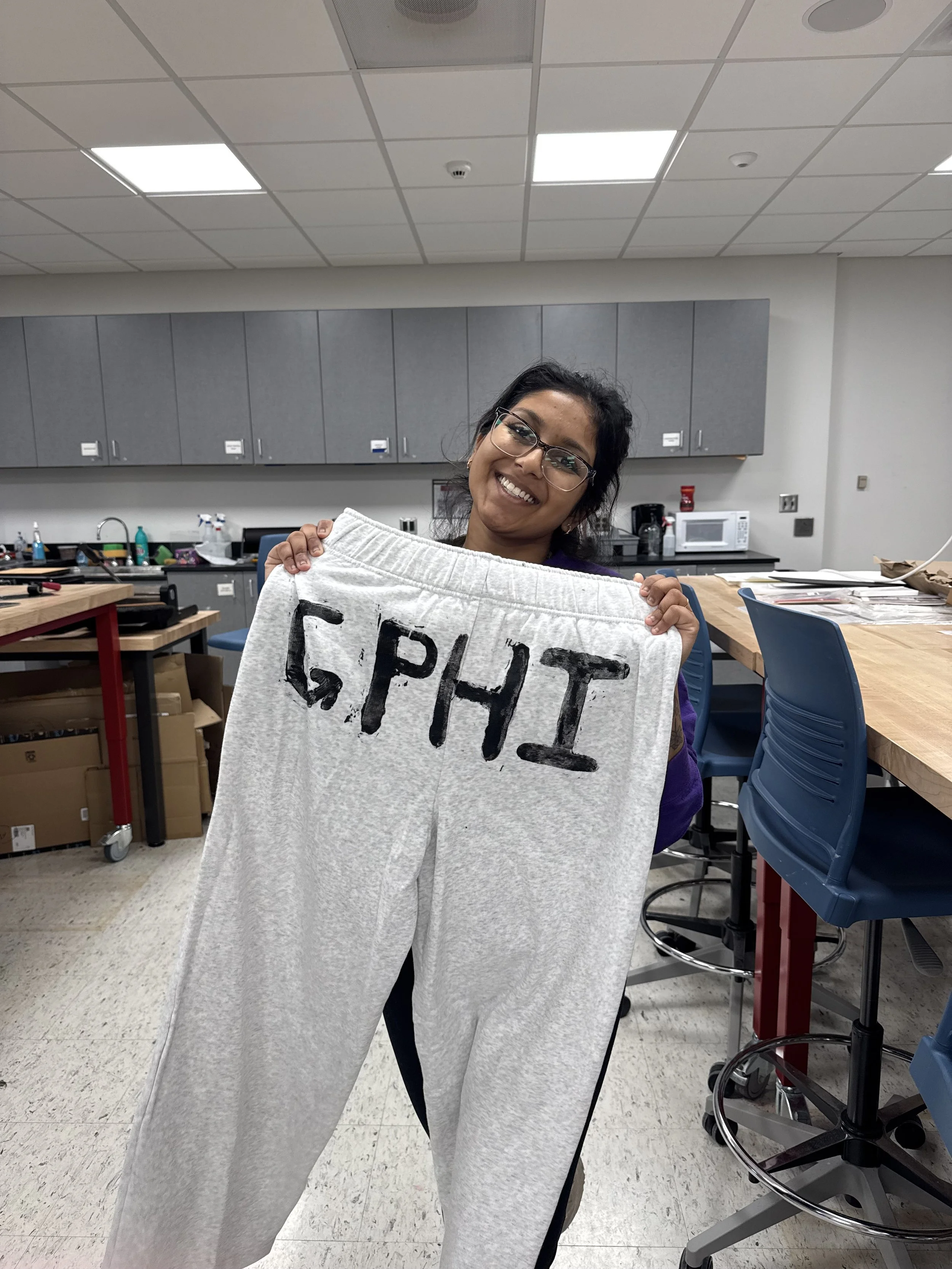
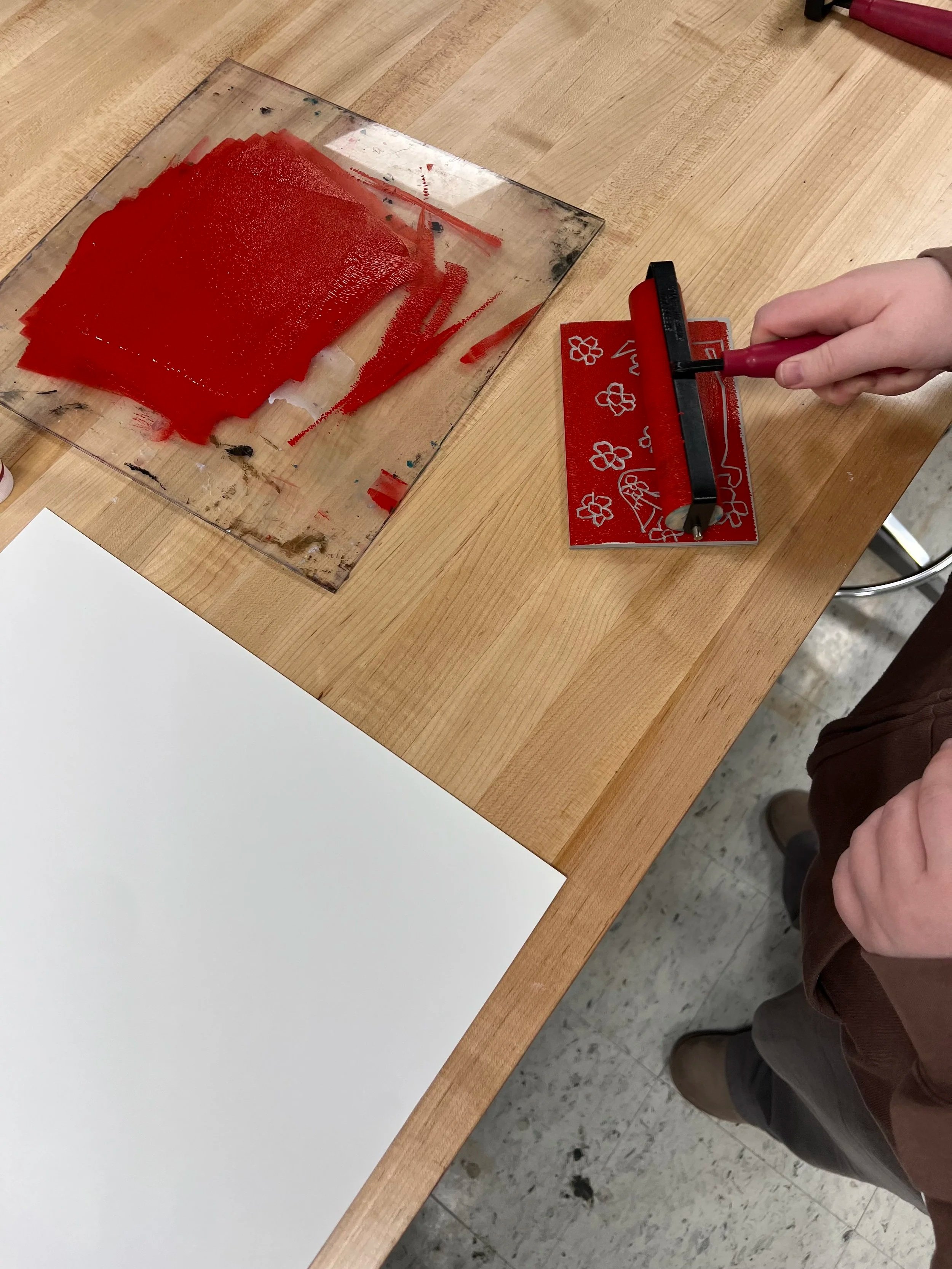
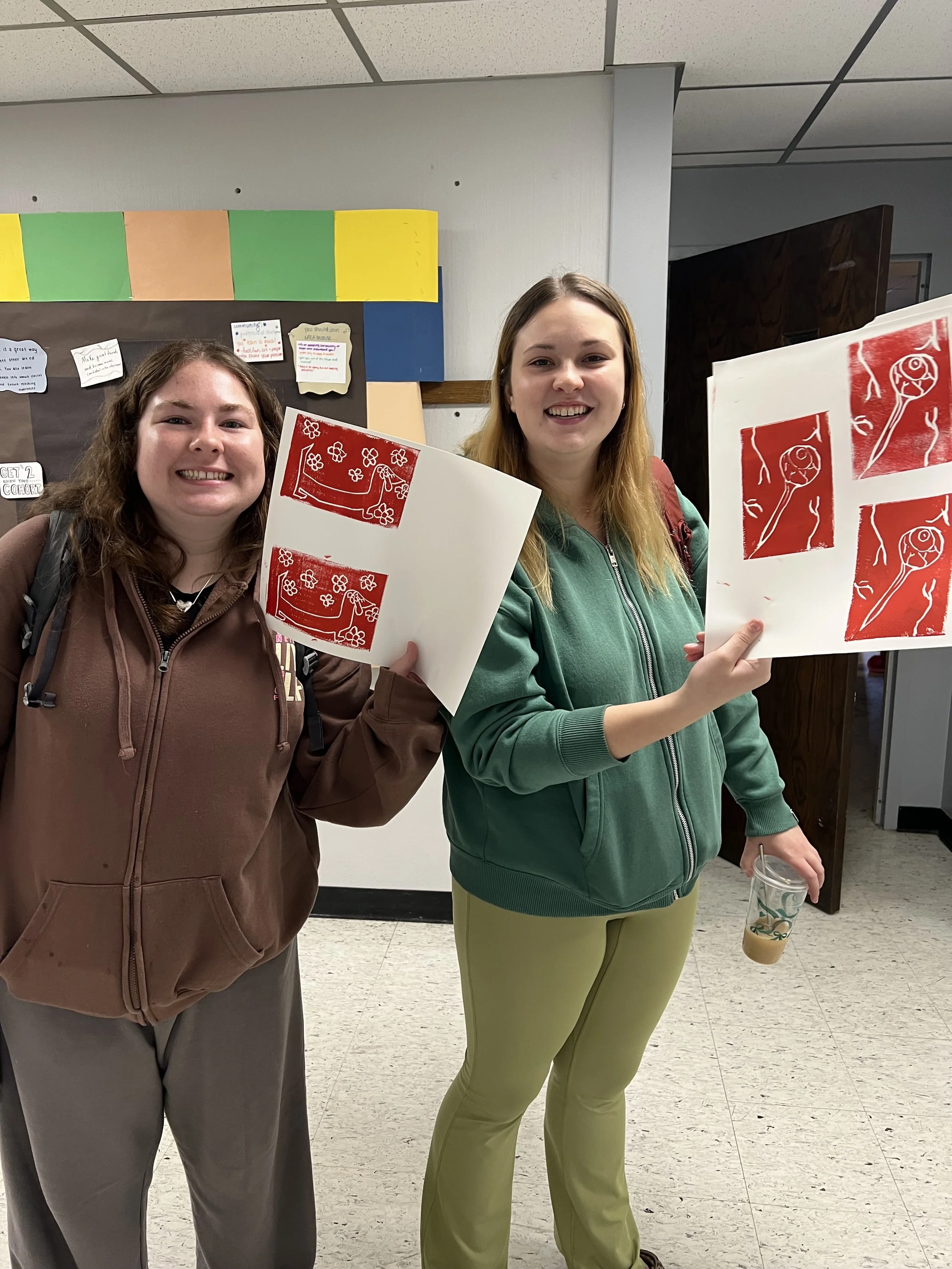
On November 20, 2025, a team of art education students and I conducted a printmaking workshop for members of the Panhellenic community at Illinois State. We sent out a sign up to the sororities that we are involved in, and we had 7 participants. Students were allowed complete creative freedom with their subjects, and were instructed to bring articles of clothing to print on. We instructed them through the printmaking process; from transferring/sketching the subject on the rubber plate, to carving, to finally printing on paper and fabric. Each student walked away with a completed piece as well as a plate that they could use in the future.
Pal 2: Teach a printmaking workshop for members of the Illinois State Panhellenic community
*
Pal 2: Teach a printmaking workshop for members of the Illinois State Panhellenic community *
Rationale
Leading the printmaking workshop for members of the Panhellenic community demonstrated the use of leadership skills to foster growth and collaboration within a learning community. By helping with organizing and facilitating this event, I contributed to the advancement of knowledge in the teaching profession (IPTS 9P) through sharing printmaking techniques and encouraging creative exploration. This experience also reflects IPTS 9Q, as we served participants with equity and respect, ensuring an inclusive and supportive environment where each individual could express themselves artistically. Providing clear instruction, guidance, and encouragement throughout the process modeled professionalism and advocacy for the arts, while empowering participants to engage in meaningful, hands-on learning.